AI Generated Summary
AI Generated Content Disclaimer
Note: This summary is AI-generated and may contain inaccuracies, errors, or omissions. If you spot any issues, please contact the site owner for corrections. Errors or omissions are unintended.
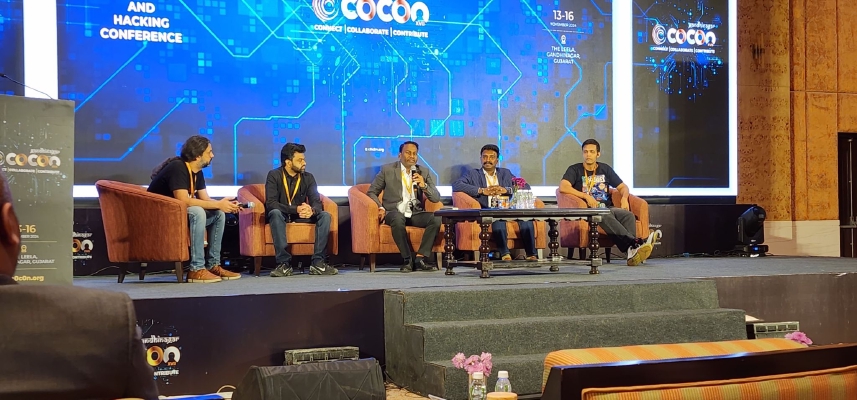
This panel discussion at c0c0n 2024 explored “The Pager Attack: A Wake-Up Call for Global Cyber Defense Strategies,” examining the September 17, 2024 Lebanon pager attack and its implications for supply chain security, cyber resilience, and national defense. The panel featured cybersecurity practitioners, a government official, and an ethical hacker, each bringing distinct perspectives on the intersection of hardware security, software supply chains, and geopolitical threats.
Background
On September 17, 2024, multiple pagers used by Hezbollah operatives detonated simultaneously across Lebanon. The devices — AR924 pagers bearing Gold Apollo branding — were manufactured through a front company (BAC Consulting) established in Hungary, which had legitimately licensed the brand from the Taiwanese manufacturer. Plastic explosives were embedded within the lithium-ion battery cells, connected with non-metallic detonators to evade detection. The following day, walkie-talkies from ICOM also detonated. The operation involved years of preparation, including building a legitimate-seeming company, creating marketing materials, and producing videos highlighting the “superior battery” to make the product appear authentic.
Panelists
- Anant Shrivastava: Founder, Cyfinoid Research — specializing in supply chain security, particularly software supply chain security and SBOMs
- IAS Officer (Government Representative): Two decades of experience in technology, focused on cyber resilience, public awareness, and government-community collaboration
- Philip: DC Technology — 20+ years in AI, cyber security, and national security; extensive experience in incident response and corporate security war rooms
- Nikhil: Founder, BSides Ahmedabad (security conference) — ethical hacker with experience working on US federal government projects and vulnerability research
Key Themes
1. Supply Chain as an Attack Vector — Beyond Software
- The pager attack demonstrated that conventional physical supply chains are just as vulnerable as software supply chains — both are attack vectors in inter-country and inter-organizational disputes
- The operation was orchestrated through legitimate channels: a real company, official licensing, and an established distribution chain, making traditional due diligence ineffective
- Parallels drawn to Stuxnet — even air-gapped systems (submarines, nuclear plants) can be compromised through supply chain manipulation
- Similar pager/phone-based explosive attacks have occurred since 1996, but the Lebanon attack was unprecedented in scale and coordination
2. Trust But Verify — Know Your Ingredients
- Anant emphasized that whether purchasing hardware or importing a software library, organizations must understand who built it, where components originated, and whether the source is trustworthy
- Software Bills of Material (SBOMs) provide inventory visibility — not as a security guarantee, but as a mechanism to detect unexpected changes in components
- When a hardware component changes (e.g., a different battery specification), the question “why did this change?” is rarely asked — both in hardware and software ecosystems
- The same applies to software upgrades: blindly upgrading or stubbornly staying on old versions are both flawed approaches — understanding what changed and why is essential
3. Attack Surface Reduction Over Tool Accumulation
- Organizations deploy hundreds of security tools (some with 380+ tools) managed by insufficient staff, leading to misconfiguration and a false sense of security
- The checkbox mentality — buying products to satisfy buzzwords — creates bloat without actual security improvement
- The real need is attack surface reduction: fewer dependencies, fewer tools, fewer packages — deliberately minimizing what needs to be defended
- Corporate software with 500-600 dependencies pulled from unknown sources exemplifies the problem
4. Zero Trust as a Mindset, Not a Product
- Zero trust has been misrepresented by vendors as a tool or technology, when it is fundamentally a concept, framework, and mindset
- It extends beyond network segmentation to: applications (especially AI-driven autonomous decisions), data (ML poisoning and data integrity), devices, and people
- Core principle: “verify before trusting” — including not clicking every link, not trusting every communication, and questioning every component
5. Awareness Alone Is Insufficient — Action Is Required
- Despite 20+ years of awareness programs since IT became mainstream, breaches continue because awareness rarely translates into actionable behavior
- Philip noted that in incident response, millions of dollars in tools and processes fail because basics and fundamentals are not followed — the human element remains the weakest link
- A chemical manufacturing company was shut down for 4 days by a simple phishing email — the real concern was that the compromised IP could be used for weapons manufacturing
- Awareness must be continuous, actionable, and level-appropriate — from individuals to organizations to nations
6. Government-Industry-Community Collaboration
- Cyber security challenges are increasingly interdisciplinary — requiring expertise from technology, finance, forensic accounting, and supply chain domains
- India lacks structured, layered, community-based approaches for official-unofficial system engagement in cyber initiatives
- There is a need for neutral spaces where researchers, practitioners, and officials can collaborate freely
- Digital risks are not yet part of India’s disaster management plans — they need to be recognized as potential disasters
- The “Made in India” initiative addresses some supply chain concerns, but in practice companies bypass sourcing restrictions for short-term gains
7. Individual Threat Modeling
- Every individual and organization has a different threat model — a student, a military colonel, and a retired government official each face different threats
- Security posture must be calibrated accordingly — “I have nothing to hide” is a dangerous assumption because “you don’t know what you have, but your hacker knows”
- Every device should be treated as a potential threat — phones, laptops, car infotainment systems — anything connected can be weaponized
8. Hardware Security Is an Unsolved Problem
- There is currently no reliable way to identify a hardware backdoor in a chip — no standard exists for how backdoors are implemented, making detection nearly impossible
- Even if the pager purchasers had opened the battery, identifying embedded plastic explosives with non-metallic detonators would have been extremely challenging
- The attackers designed the operation to pass known due diligence processes, including X-ray scanning for metallic components
Key Takeaways
- Supply chain attacks operate through legitimate channels — front companies, official licenses, and established distribution chains can all be weaponized, making traditional due diligence alone insufficient
- SBOMs and bills of material provide visibility into components but are not silver bullets — they enable detection of unexpected changes, which must then be investigated
- Attack surface reduction is more valuable than tool accumulation — organizations should reduce dependencies, software packages, and tools rather than adding more security products
- Zero trust must be adopted as a mindset across all layers — applications, data, devices, and people — not just as a network segmentation tool
- Continuous awareness must translate into actionable behavior — knowing about threats is meaningless without the discipline to act differently
- Cyber security is now interdisciplinary — requiring collaboration across technology, government, finance, and community stakeholders
- Every connected device should be treated as a potential attack vector — continuous testing and hardware audits are essential
- India must move beyond being a market for foreign security products to becoming a creator of core security technologies
- Individual threat modeling is essential — security posture must match the specific threat landscape each person or organization faces
- Cyber resilience — the ability to recover from attacks — must be built at individual, organizational, and national levels